
Why Is Hot Water Coming From My Cold Faucet?


You turn on the cold faucet expecting cool water, but the water comes out warm, or even hot.
Sometimes it cools down within a few seconds. Other times, it stays warm much longer than expected or seems to become hotter the longer it runs.
There are several possible reasons for hot water coming from a cold faucet. The cause may be as simple as water warming inside a pipe, but it can also indicate that hot water is crossing into the cold-water system through a faucet, shower valve, recirculation valve, mixing valve, or incorrectly connected pipe. The first question is whether the warm water is temporary or continues flowing from the cold side.
Is Briefly Warm Water From a Cold Faucet Normal?
It can be. Water sitting inside the cold-water pipe can warm up between uses, especially when the pipe:
Runs through a hot attic
Passes through an exterior wall
Is located in a warm garage or mechanical room
Runs close to a hot-water pipe
Is exposed to direct sunlight
Is near a furnace, boiler, or other heat source
During warm weather, the incoming water supply may also be warmer than homeowners expect.
If the faucet produces slightly warm water for a few seconds and then becomes consistently cold, the water may have simply warmed while sitting in the pipe. If it stays warm or becomes increasingly hot, however, there may be a connection between the hot- and cold-water systems.
What Is a Plumbing Crossover?
A plumbing crossover happens when hot water enters the cold-water piping (or cold water enters the hot-water piping) through a place where the two sides are connected. Hot and cold water lines normally meet inside faucets, shower valves, washing machines, mixing valves, and certain recirculation systems. Internal components are supposed to control the direction and mixture of the water.
If a cartridge, check valve, bypass valve, or another component fails, pressure can push water from one side of the plumbing system into the other. The fixture causing the crossover may not be the same faucet where you notice the problem. A failed shower cartridge in one bathroom, for example, can affect the temperature at cold-water fixtures elsewhere in the house.
Common Causes of Hot Water on the Cold Side
A Failed Single-Handle Faucet Cartridge
A single-handle faucet controls hot and cold water through one internal cartridge. When that cartridge becomes worn or damaged, it may allow water to pass between the hot and cold supply lines even when no water is flowing from the faucet.
Because the hot water and cold water systems operate under pressure, water may move through the defective cartridge and enter the opposite side of the plumbing. Potential sources include:
Kitchen faucets
Bathroom faucets
Tub-and-shower valves
Utility-sink faucets
Bar or prep-sink faucets
Touch-activated or motion-sensor faucets
A faucet doesn’t necessarily have to be dripping from the spout to create a crossover inside the plumbing.
A Shower or Tub Valve Problem
Shower valves are frequent crossover points because both water supplies meet inside the valve body. A worn pressure-balancing cartridge, thermostatic cartridge, mixing component, or check valve may allow hot and cold water to communicate when they should remain separated. Possible clues include:
Unstable shower temperature
Hot water at nearby cold faucets
Trouble adjusting the shower temperature
A recent shower-valve repair
The problem beginning after a cartridge was replaced
Temperature changes when another fixture is used
The shower may appear to work normally while still allowing crossover when it is turned off.
Missing or Failed Check Valves
Check valves are designed to permit water to move in one direction while preventing reverse flow. Some faucets, appliances, mixing devices, and recirculation systems depend on check valves to keep hot and cold water from moving backward through their connections.
If a check valve is missing, installed incorrectly, stuck open, or no longer sealing, cross-flow may occur. Delta, for example, identifies missing or improperly installed supply line check valves as a possible cause of hot and cold cross-flow in certain faucet systems.
A Washing Machine or Other Connected Appliance
A washing machine has both hot- and cold-water connections that meet at its internal mixing valve. Depending on the appliance and plumbing arrangement, a defective valve or an unusual hose connection can create a crossover between the two supplies. Other possible sources include:
Utility sinks with hose attachments
Bidet attachments
Commercial dishwashing equipment
Salon or medical equipment
Mop sinks
Specialty faucets
Tempering or mixing valves
Improperly connected hoses
This is one reason finding a crossover may require checking more than the faucet where the symptom appears.
Could a Hot-Water Recirculation System Cause Warm Cold Water?
Yes, but that doesn’t always mean the system is malfunctioning. Some homes have a dedicated return line that carries unused hot water back to the water heater. Other homes use a retrofit recirculation system because no dedicated return pipe was installed.
A retrofit system may use a thermostatic crossover or bypass valve beneath a distant sink. The valve temporarily allows water from the hot water line to return through the cold water line until the desired temperature reaches that location.
Navien’s NaviCirc system, for example, uses the existing cold-water supply as the return path when a dedicated recirculation line isn’t available. Its crossover valve is designed to stop circulation when the water at the valve reaches approximately 95°F. Grundfos offers a similar retrofit arrangement using a bypass valve and the existing cold-water line.

Because the cold line serves as the temporary return path, water from the cold faucet may initially feel warm while the recirculation system is operating. That can be a normal tradeoff of this type of system. However, the cold water shouldn’t remain excessively hot indefinitely. Persistent hot water may indicate:
A crossover valve that isn’t closing correctly
An incorrectly installed valve
A failed check valve
Improper pump settings
A pump running more often than intended
An incorrectly configured recirculation system
Another crossover elsewhere in the home
The exact behavior depends on the system design, controls, water temperature, piping layout, and where the crossover valve is installed.
Could the Water Heater Cause the Problem?
The water heater itself usually doesn’t send hot water backward through properly functioning cold water piping. The problem is more commonly somewhere in the plumbing distribution system where the hot and cold sides connect. However, a crossover can affect how the water heater operates. Depending on the system, you may notice:
A tankless water heater starting when no hot faucet appears to be open
Unstable hot-water temperatures
Longer-than-normal wait times
Lukewarm water at hot fixtures
The recirculation pump operating unexpectedly
More frequent water-heater operation
Hot water reaching cold fixtures throughout the house
Repairing or replacing the water heater without identifying the crossover may not solve the problem.
Could the Hot and Cold Pipes Be Connected Incorrectly?
Incorrect piping is another possibility, especially if the issue began after:
A bathroom or kitchen remodel
A new faucet or shower installation
Water-heater replacement
Recirculation-system installation
Plumbing repairs
Appliance installation
Repiping part of the home
The hot and cold supplies may have been reversed at one fixture, but reversed connections alone are different from a crossover affecting multiple fixtures. A plumbing connection that unintentionally joins the two systems can cause broader and less predictable temperature problems.
How Can You Narrow Down the Cause?
Before calling a plumber, a few observations can help explain what is happening.
Check More Than One Faucet
Run the cold water at several locations. Determine whether the problem occurs at:
One faucet
One bathroom
Fixtures near the water heater
Fixtures farthest from the water heater
Every cold-water fixture in the home
If only one fixture is affected, the cause may be local to that faucet or its piping. If several fixtures are affected, a crossover elsewhere may be feeding hot water into a larger portion of the cold-water system.
Notice How Long the Warm Water Lasts
Pay attention to whether the water:
Starts warm and becomes cold
Starts cold and gradually becomes warm
Stays warm continuously
Becomes hot only while the recirculation pump runs
Changes temperature when another fixture or appliance operates
Water that starts warm and quickly cools may have been sitting in a warm pipe. Water that becomes warmer as it runs more strongly suggests that hot water is actively entering the cold-water system.
Consider When the Problem Began
Think about any recent changes. Was a faucet cartridge replaced? Was a bathroom remodeled? Was a new washing machine installed? Did the issue begin after adding or servicing a recirculation system? The timing may help identify which fixture or component should be checked first.
Check Whether You Have Hot-Water Recirculation
If the home has a recirculation pump, determine whether it uses:
A dedicated return line
A crossover valve beneath a sink
A timer
A temperature control
An on-demand button
Smart or learning controls
Don’t remove or adjust components unless you understand the system. Knowing what is installed will help the plumber distinguish expected operation from a malfunction.
How Does a Plumber Locate a Crossover?
Finding the source may require isolating fixtures and components individually. Depending on the plumbing system, the diagnostic process may include:
Comparing temperatures at several fixtures
Checking when and where the cold line becomes warm
Temporarily isolating individual faucets or appliances
Inspecting shower and faucet cartridges
Checking appliance mixing valves
Inspecting recirculation crossover valves
Testing check valves
Reviewing pump settings and operating times
Examining recently modified plumbing
Checking whether the water heater operates when no hot water should be flowing
Because the fixture causing the problem may be far from where the symptom appears, diagnosis sometimes requires a process of elimination.
What Repairs May Be Needed?
The appropriate repair depends on the source of the crossover. Possible solutions include:
Replacing a failed faucet cartridge
Replacing a shower-valve cartridge
Repairing a thermostatic or pressure-balancing valve
Installing or replacing check valves
Replacing a failed recirculation crossover valve
Correcting recirculation settings
Repairing an appliance mixing valve
Correcting reversed or improperly connected piping
Reconfiguring an incorrectly installed recirculation system
A properly diagnosed crossover often can be repaired without replacing the water heater.
When Should You Call a Plumber?
Schedule plumbing service when:
Cold water stays hot after running
The problem affects multiple fixtures
The temperature has changed suddenly
The water becomes dangerously hot
A tankless water heater starts unexpectedly
Hot-water temperatures are unstable
The problem began after plumbing work
Your recirculation system no longer operates normally
You can’t determine which fixture is causing the crossover
Unexpectedly hot water at a cold faucet can create a scalding risk, particularly for children, older adults, and anyone expecting the water to be cold.
Hot Water From a Cold Faucet Doesn’t Always Mean a Bad Water Heater
If slightly warm water becomes cold after a few seconds, it may have simply warmed while sitting inside the pipe. If the cold water remains warm, becomes hotter as it runs, or appears at several fixtures, a plumbing crossover is more likely.
The problem may be inside a faucet, shower valve, appliance, check valve, or recirculation system, not necessarily the water heater itself.
Hot Water Solutions provides water-heater diagnostics, hot-water recirculation service, and general plumbing service throughout Kennesaw and surrounding Metro Atlanta communities.
Call 678-540-6164 if hot water is coming from your cold faucets or your plumbing temperatures have become difficult to control.
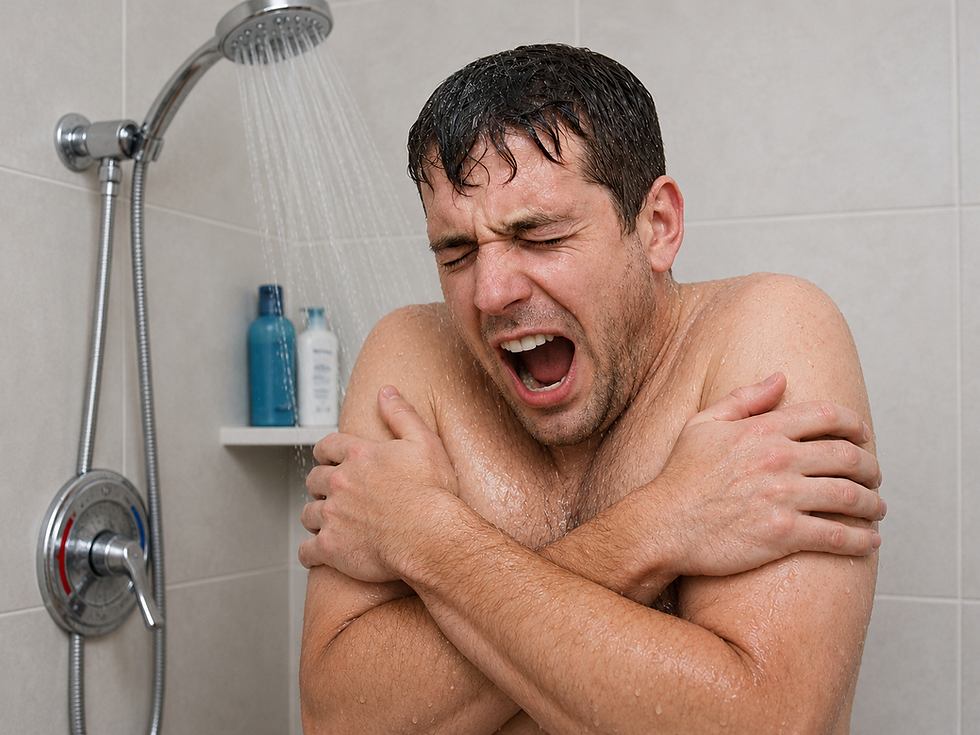
Because a cold shower should be by choice.
Related Reading
FAQ Questions for Rich Results
Why is warm water coming from my cold faucet?
Water sitting in a pipe may warm up in an attic, wall, garage, or mechanical room. If it quickly becomes cold, that may be the explanation. If it stays warm, a plumbing crossover or recirculation system may be involved.
What is a hot-and-cold plumbing crossover?
A crossover occurs when water passes between the hot- and cold-water systems through a faucet, shower valve, appliance, mixing valve, check valve, or recirculation valve.
Can a bad faucet cartridge cause hot water in the cold line?
Yes. A damaged single-handle faucet or shower cartridge may allow pressurized hot water to enter the cold-water piping even when the fixture is turned off.
Can a recirculation pump make cold water feel warm?
Yes. Retrofit systems without dedicated return lines may temporarily use the cold-water pipe as the return path. Some initial warmth may be expected, but continuously hot cold water should be investigated.
Does hot water from a cold faucet mean my water heater is failing?
Usually not. The cause is more commonly a crossover somewhere in the plumbing system. However, a crossover may affect water-heater operation and should be diagnosed.
Why does the problem show up at a different faucet from the one causing it?
Once hot water enters the cold-water piping, it can travel through the connected plumbing system. The failed component may therefore be located in another bathroom, appliance, or fixture.

Comments