
Tank vs Tankless Water Heater Pros and Cons: A Complete Guide for Homeowners

When it’s time to replace your water heater, the biggest question isn’t brand, it’s type..
Should you stick with a traditional tank or upgrade to tankless?
If you’ve been researching tank vs tankless water heater pros and cons, you’ve probably seen a lot of conflicting information. Some sources make tankless sound like the obvious upgrade, while others say tanks are still the best option.
The truth is: both systems work well when they’re the right fit for the home.
At Hot Water Solutions, we install both systems across Cobb, Cherokee, Paulding, Bartow, Forsyth, and Fulton County, and the “right” answer depends on how your home actually uses hot water.

Tank vs Tankless Water Heater Pros and Cons: Which Is Better?
Tank Pros:
Lower upfront cost
Simpler installation
Proven reliability
Tankless Pros:
Unlimited hot water
Longer lifespan
Higher efficiency
👉 The best choice depends on usage, budget, and long-term plans.
Tank vs Tankless Water Heater Pros and Cons: Understanding the Core Differences
The main difference between tank and tankless systems is how they heat water.
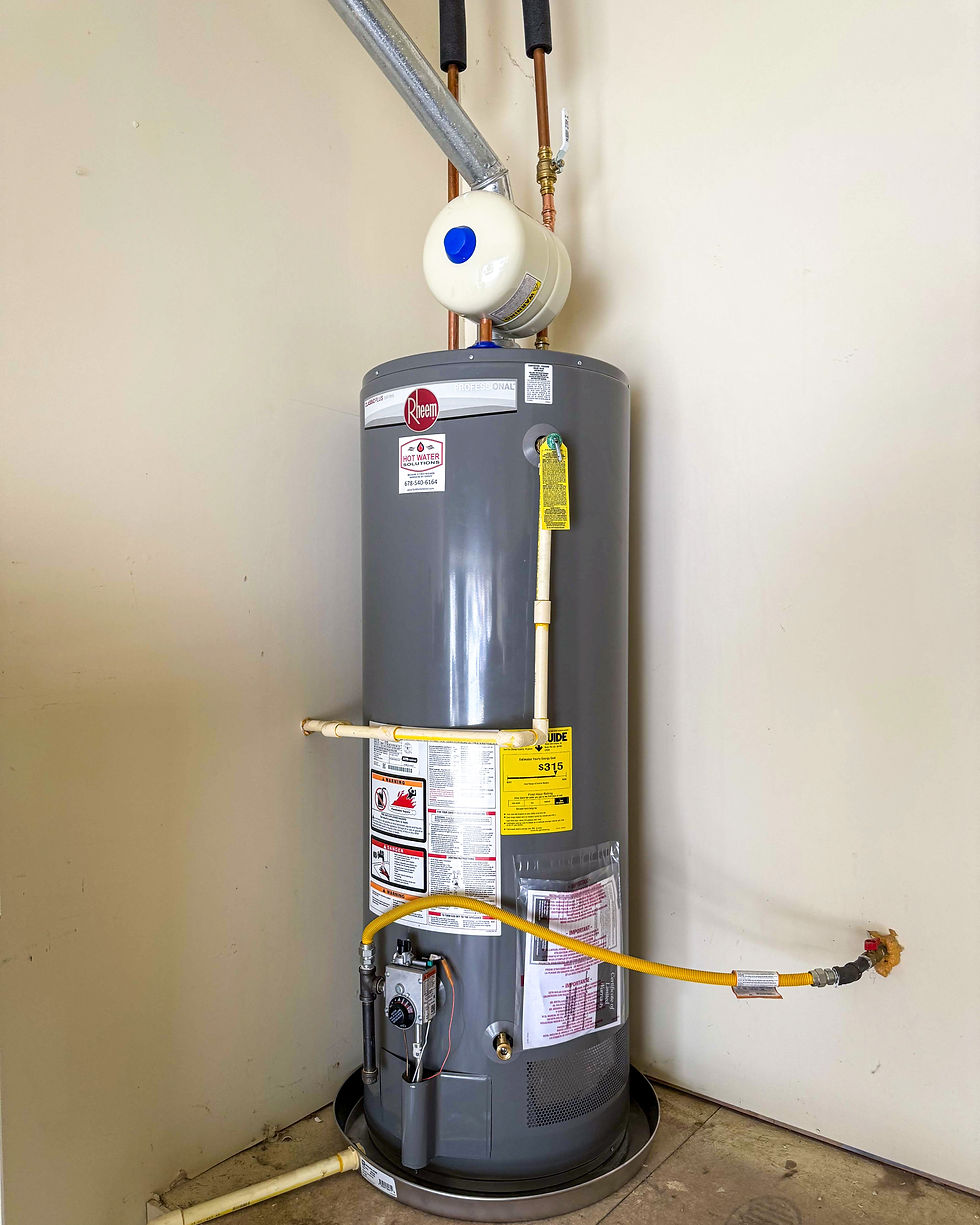
Tank Systems
20–100+ gallon storage
Heats water continuously
Tankless Systems
Heats water on demand
No storage tank
That one difference impacts everything:
Performance
Energy usage
Installation requirements
Long-term cost
Tank Water Heater Pros and Cons
Pros of Tank Water Heaters
✔ Lower upfront cost: Tank systems are significantly less expensive to install, especially when replacing an existing unit.
✔ Simpler installation: In most homes, replacing a tank with another tank is straightforward and doesn’t require major upgrades.
✔ Reliable performance: Tank systems have been used for decades and perform consistently when sized correctly.
Cons of Tank Water Heaters
❌ Limited hot water supply: Once the tank is depleted, you have to wait for it to reheat.
❌ Shorter lifespan: Most tank water heaters last around 10–12 years in real-world conditions.
❌ Less energy efficient: They continuously heat water, even when you’re not using it.
Tankless Water Heater Pros and Cons
Pros of Tankless Water Heaters
✔ Unlimited hot water: As long as the system is sized correctly, you won’t run out.
✔ Longer lifespan: Tankless systems often last 20+ years.
✔ Energy efficiency: They only heat water when it’s needed, reducing wasted energy.
Cons of Tankless Water Heaters
❌ Higher upfront cost: Installation is more expensive, especially if upgrades are required.
❌ Installation complexity: Gas line sizing, venting, and system setup must be done correctly.
❌ Performance depends on sizing: If the system is undersized or installed incorrectly, performance suffers.

Real-World Considerations Most Blogs Don’t Talk About
This is where most online guides fall short.
Tank maintenance reality
You’ll often hear about flushing and anode rods, but in real-world conditions, most systems are never maintained consistently from the beginning. Attempting maintenance later can sometimes cause issues.
Tankless requires proper setup and annual maintenance
Tankless isn’t “plug and play.”Performance depends heavily on:
For them to perform the way homeowners expect, they need:
Correct sizing
Proper gas supply
Installation quality
And unlike tank systems, they also require annual maintenance to keep performance up, prevent buildup inside the unit, and maintain the warranty.
👉 The good news: many homeowners can handle this maintenance themselves with the right setup.
Not every home needs tankless
If your usage is moderate and your setup is simple, a tank system may actually be the better choice.
Which One Is Right for Your Home?
Choose a tank water heater if:
You want a lower upfront cost
Your home already has a tank setup
Your hot water demand is moderate
Choose a tankless water heater if:
You want unlimited hot water
You plan to stay in your home long-term
You’re willing to invest more upfront
Bottom Line
When comparing tank vs tankless water heater pros and cons, there’s no one-size-fits-all answer.
Both systems work extremely well when they’re matched to the home and installed correctly.
👉 Not sure which is right for your home? Call or text 678-540-6164 and we’ll walk you through your options based on your setup, not a generic recommendation.


Comments