
Do I Need a Water Heater Expansion Tank?

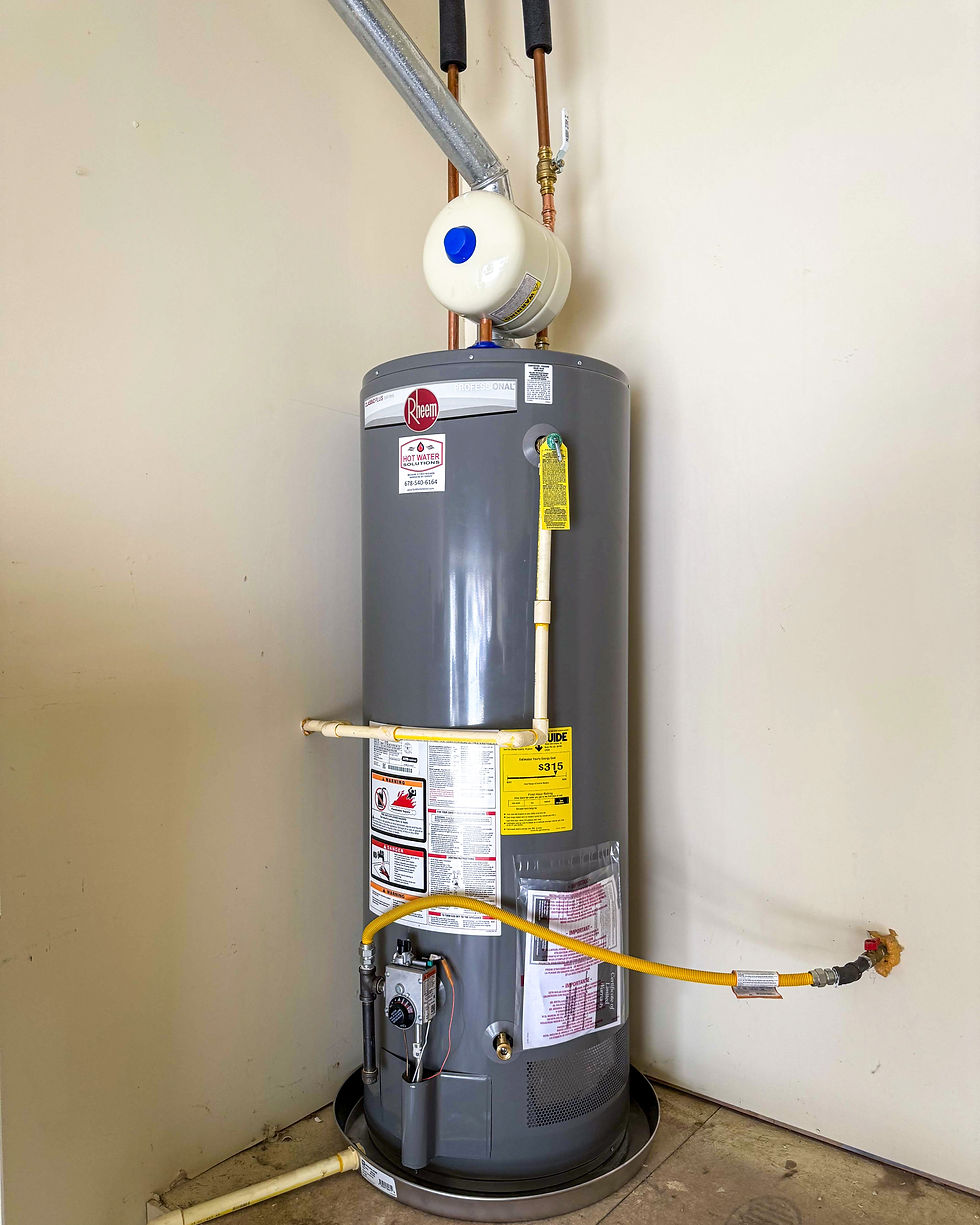
If you’ve looked at a newer water heater installation, you may have noticed a small tank connected to the cold-water line above the unit. That is a water heater expansion tank, and it isn’t there to provide extra hot water. Its job is to give expanding water somewhere to go. An expansion tank controls pressure and protects the water heater and other plumbing components.

What Does a Water Heater Expansion Tank Do?
Water expands as it heats. When a tank-style water heater heats a full tank of cold water, the volume of that water increases slightly. That additional volume has to go somewhere.
In an open plumbing system, the expanding water may be able to move backward toward the public water supply. In a closed system, a pressure-reducing valve, check valve, backflow preventer, or similar device prevents it from flowing backward. The water becomes trapped between the water heater and that device. As it heats and expands, the pressure inside the home’s plumbing system rises.
A water heater expansion tank gives that extra volume a place to go. Inside the tank is a flexible diaphragm separating the water from a pressurized air chamber. As the water expands, it pushes against the diaphragm rather than forcing the entire plumbing system to absorb the pressure increase.
How Do I Know if My Plumbing System Is Closed?
Most homes have a closed plumbing system without the homeowner realizing it. Your system may be closed if it has:
A pressure-reducing valve
A check valve
A backflow-prevention device
Certain types of water meters
Another device that prevents water from flowing toward the public supply
A pressure-reducing valve, commonly called a PRV, is especially common in homes where the incoming municipal water pressure is too high. The most reliable way to determine whether an expansion tank is needed is to inspect the plumbing system and measure the home’s water pressure.
What Happens Without an Expansion Tank?
The effects of thermal expansion aren’t always obvious. You may not see one dramatic failure. Instead, repeated pressure increases can put additional stress on the water heater and plumbing components over time. Possible signs of a pressure or expansion problem include:
Water dripping from the temperature-and-pressure relief valve
Water pressure that rises after the water heater runs
Plumbing fixtures that wear out prematurely
Toilets that begin running unexpectedly
Dripping faucets
Damage to supply lines or appliance connections
A shortened expansion-tank or water-heater lifespan
These symptoms can have other causes, so seeing one doesn’t automatically prove that the expansion tank is missing or defective. The pressure needs to be tested before the correct repair can be recommended.
Does Every Water Heater Need an Expansion Tank?
Not every installation requires one, but they are mandatory for the vast majority of modern homes. Whether you need a water heater expansion tank depends on the design of the plumbing system, the water pressure, manufacturer instructions, and local building codes.
If your home has a pressure-reducing valve (PRV), a backflow preventer, or a modern utility meter with a check valve, you have a closed plumbing system. When a standard tank-style water heater warms up, the water expands. In a closed system, this extra volume has nowhere to go, causing dangerous pressure spikes that can damage your appliances and pipes.
To prevent this, plumbing codes (including Georgia state amendments) mandate installing a thermal expansion tank on the cold-water line of storage water heaters in closed systems. However, simply attaching any tank to a pipe will not guarantee safety or compliance. The expansion tank must be properly sized to match your water heater's capacity, pre-charged with air to match your home’s specific static water pressure, and independently supported or strapped so its weight does not stress the plumbing lines.
Expansion Tanks Need the Correct Air Pressure
Before an expansion tank is installed, its air charge should be adjusted to match the home’s normal water pressure. If the air pressure and water pressure don’t match, the tank may not have enough room to accept the expanding water. That can reduce its effectiveness and shorten the life of the internal diaphragm.
This is one reason we measure the home’s water pressure as part of the installation instead of treating every house exactly the same. If the incoming pressure is too high, the home may also need a properly functioning pressure-reducing valve. An expansion tank is designed to handle thermal expansion; it isn’t a substitute for correcting excessive incoming water pressure.
How Long Does a Water Heater Expansion Tank Last?
Expansion tanks don’t last forever. The internal diaphragm can eventually fail, allowing the tank to fill completely with water. An improperly charged tank, excessive pressure, poor support, or an incorrect size can also contribute to premature failure.
A failed expansion tank may feel unusually heavy, sound completely solid when tapped, or allow the plumbing pressure to rise after the water heater heats. Those observations can offer clues, but proper testing is the best way to confirm its condition.
Should an Old Expansion Tank Be Reused?
When we replace a tank-style water heater, we install a new, properly sized expansion tank rather than relying on an older one whose remaining lifespan and internal condition are unknown. The new tank should be:
Sized for the water heater and plumbing pressure
Charged to the correct pressure
Installed on the cold-water supply
Properly supported
Positioned according to its installation requirements
An expansion tank full of water is much heavier than an empty one. The plumbing pipe should not be expected to support that weight by itself.
A Small Part With an Important Job
A water heater expansion tank is easy to overlook, but it plays an important role in controlling pressure in a closed plumbing system. At Hot Water Solutions, we don’t treat it as something to attach to the pipe and forget. We check the home’s pressure, size and charge the tank correctly, and make sure it is properly supported.
If you’re replacing a water heater or are concerned about pressure around your existing unit, call Hot Water Solutions at 678-540-6164. We serve Kennesaw, Acworth, Marietta, Woodstock, Canton, Cartersville, Dallas, Hiram, Roswell, Alpharetta, Cumming, and surrounding areas.
Because a cold shower should be by choice.
Related Reading
Tank Water Heater Pros and Cons
How Long Does a Water Heater Last?
What Happens During a Professional Water Heater Installation?
FAQs
What does a water heater expansion tank do?
A water heater expansion tank gives heated water room to expand, helping prevent pressure from rising inside a closed plumbing system.
Does every water heater need an expansion tank?
Not every plumbing system is the same. Expansion tanks are commonly needed with tank-style water heaters when a PRV, check valve, or backflow device creates a closed system.
Can a water heater expansion tank go bad?
Yes. The internal diaphragm can fail, allowing the tank to fill with water and lose its ability to control thermal expansion.
Can an expansion tank correct high incoming water pressure?
No. An expansion tank controls the temporary pressure increase caused by heating water. Excessive incoming pressure may require a properly functioning pressure-reducing valve.


Comments