
What Makes a Water Heater Installation “Up to Code”?

Most homeowners assume that if a water heater works, it was installed correctly.
Unfortunately, that’s not always true. At Hot Water Solutions, we regularly see installations that technically “work” but are missing important safety and code-related components.
Understanding basic water heater installation code requirements helps homeowners recognize the difference between a professional installation and one that simply gets the job done temporarily.
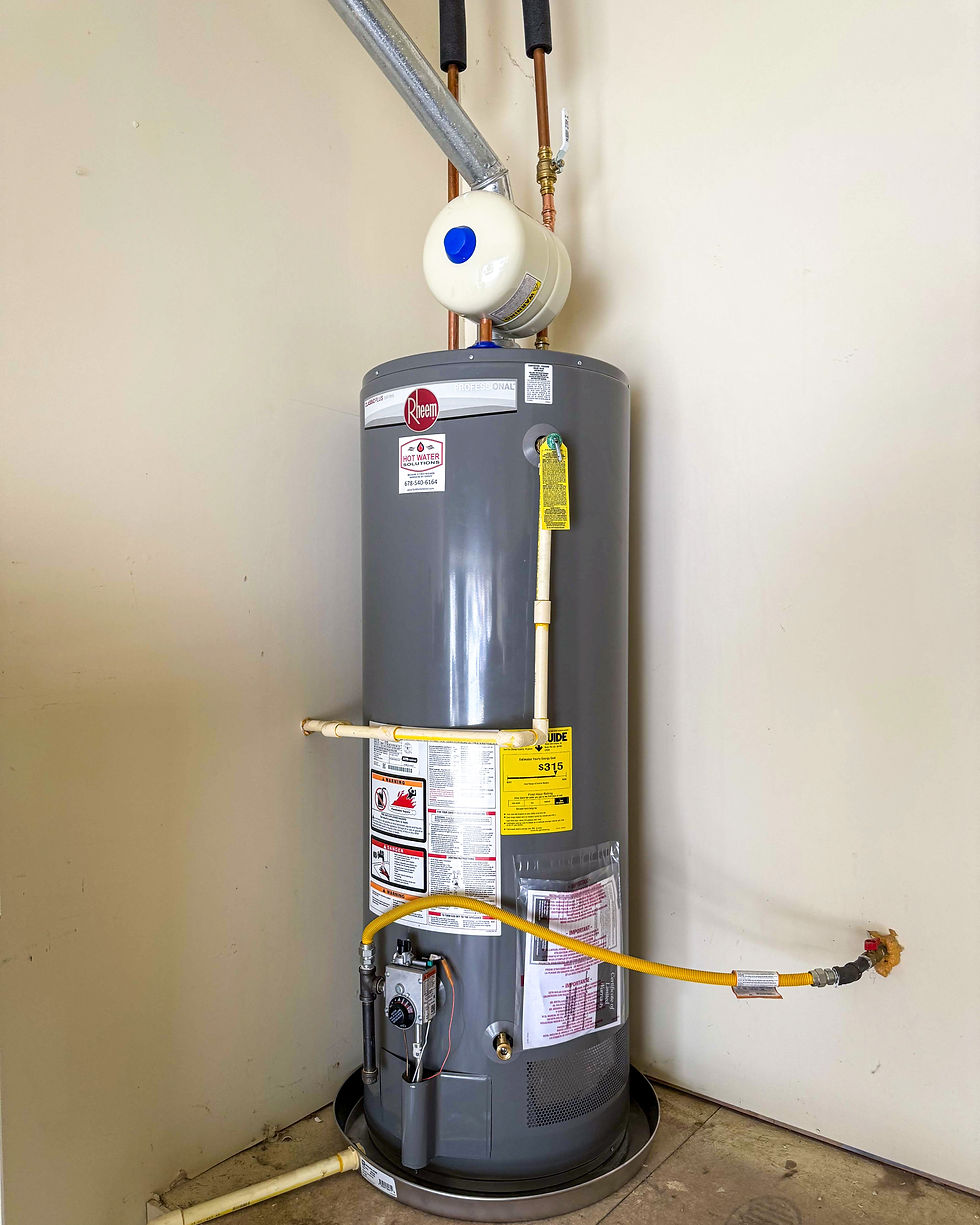
What Makes a Water Heater Installation Up to Code?
A proper installation typically includes:
Correct venting
Proper expansion tank setup
Drain pan (when required)
Proper shutoff valves
Safe gas and water connections
👉 Code-compliant installation is about safety, performance, and long-term reliability.
Water Heater Installation Code: Why It Matters
Many homeowners think code requirements are just “extra stuff.” In reality, these components are often designed to:
Protect the home
Improve system performance
Reduce risk of leaks or failures
Improve safety
Common Components Required by Water Heater Installation Code
Expansion Tanks
Expansion tanks help absorb pressure changes inside the plumbing system. Without one:
Pressure can build inside the system
Components wear faster
Leaks become more likely
Drain Pans
Drain pans help direct water away from the home if a leak occurs. These are especially important when water heaters are installed:
In finished areas
Near flooring
In locations where leaks could cause damage
Proper Venting
Gas water heaters must vent safely and correctly. Improper venting can lead to:
Poor performance
Safety concerns
Exhaust issues

Water Heater Installation Code Isn’t Just About Passing Inspection
This is one of the biggest misconceptions homeowners have. Code-compliant installation also helps:
✔ Improve longevity
✔ Reduce future problems
✔ Improve overall reliability
Cheap or rushed installs often skip important details that homeowners don’t notice until problems appear later.
Real-World Considerations
Every home is different. What’s required for one installation may not be exactly the same for another depending on:
Plumbing layout
Local requirements
Water pressure
Venting configuration
Tank vs tankless setup
Related Reading
Bottom Line
A water heater installation should be more than “good enough.”
👉 Proper installation matters for safety, reliability, and long-term performance.
Call or text 678-540-6164 if you’d like help evaluating your current system or planning a replacement.

Comments